
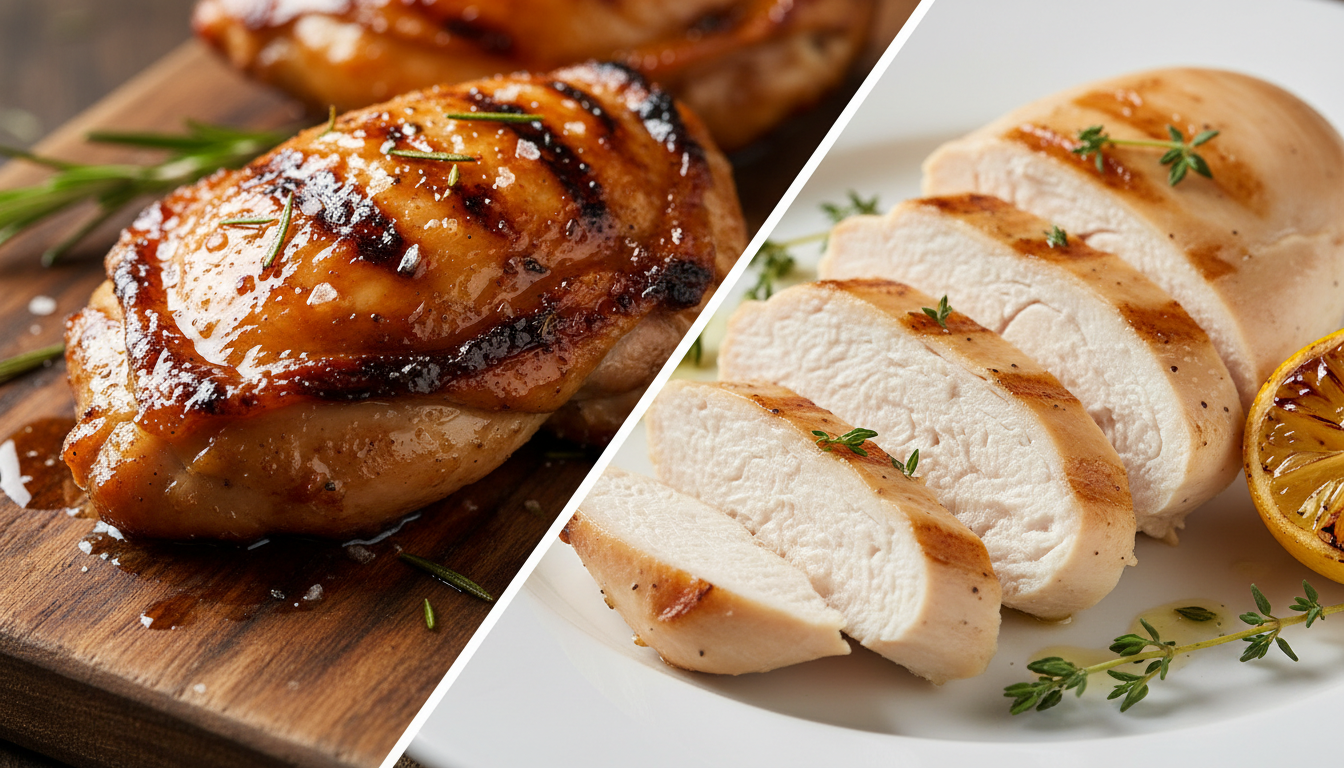
By Adam Steele
If you have ever stepped foot in a gym, browsed a fitness forum, or scrolled through health influencers on Instagram, you have likely heard the dogma: “Eat chicken breast. Repeat.” It is the holy grail of bodybuilding diets, the staple of every weight loss meal prep, and the undisputed king of lean protein.
But let’s be real for a second. How many of you actually enjoy eating dry, rubbery chicken breast day in and day out? I have seen clients choke down unseasoned white meat until they eventually snap and binge on a cheeseburger because they just couldn’t take the blandness anymore.
There is a massive misconception in the fitness world that dark meat is the enemy. We have been conditioned to believe that chicken thighs are “fatty” and “unhealthy,” while the breast is the only virtuous choice. Today, I am going to act as your coach and myth buster. We are going to dive deep into the data. We are going to look at chicken thigh vs breast nutrition with an objective lens, not “bro science.”
The truth is, your poultry selection isn’t as black and white as you might think. Let’s break down what is really on your plate.
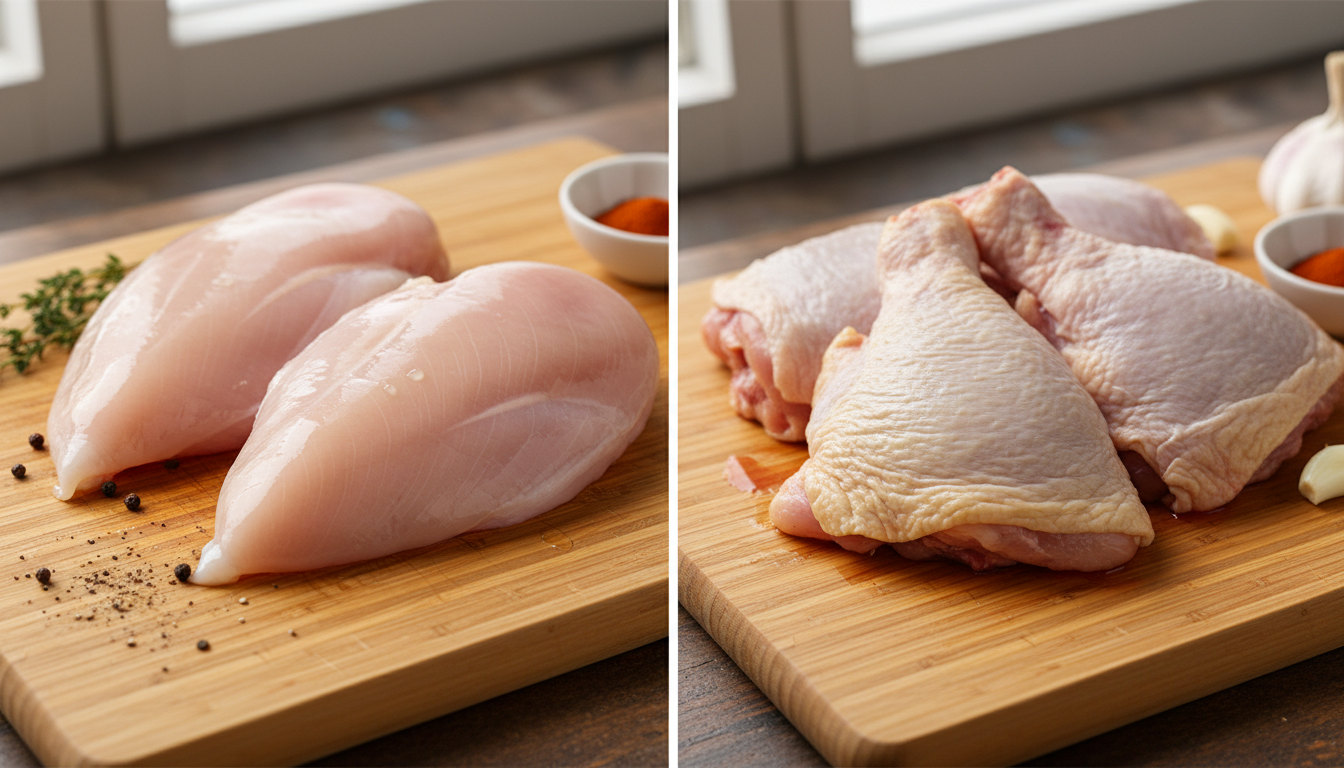
Why the Chicken Debate Matters for Your Health
As a coach, I always tell my clients that the best diet is the one you can stick to. Consistency beats perfection every single time. The debate surrounding chicken thigh vs breast nutrition matters because it directly impacts your dietary adherence, your enjoyment of food, and your micronutrient intake.
When you restrict yourself solely to chicken breast, you are certainly getting high quality protein, but you might be missing out on key vitamins and minerals found in abundance in the darker cuts. Furthermore, demonizing a perfectly healthy food source creates a negative relationship with eating. You shouldn’t feel guilty for grilling up a thigh instead of a breast.
We need to move past the 1990s low-fat craze mentality. Fat is not the enemy; excess calories are. And as you will see, the gap between these two cuts of meat is narrower than the fitness industry wants you to believe.
Chicken Thigh vs Breast Nutrition: Breaking Down the Macros
Let’s get into the weeds. To make a fair comparison, we have to look at these meats in their most comparable state: skinless and cooked. The skin is where the vast majority of the fat and calories resides. If you are comparing a skin-on fried thigh to a skinless poached breast, the breast wins every time. But that is apples and oranges.
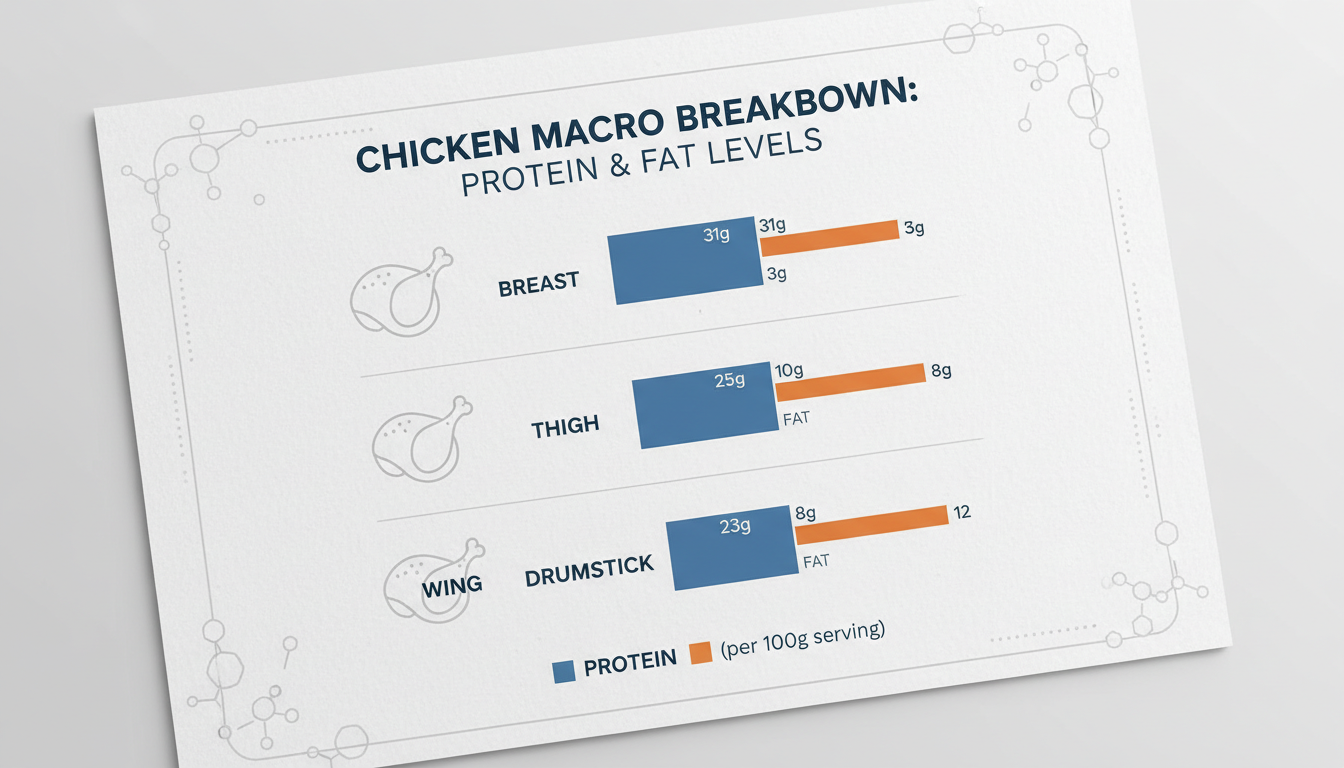
Here is a breakdown of the macronutrient profiles for a standard 3.5-ounce (100-gram) serving of roasted, skinless chicken:
Chicken Breast (Skinless)
- Calories: ~165
- Protein: ~31g
- Fat: ~3.6g
- Carbs: 0g
Chicken Thigh (Skinless)
- Calories: ~209
- Protein: ~26g
- Fat: ~10.9g
- Carbs: 0g
When you look at the chicken thigh vs breast nutrition data side-by-side, a few things jump out. Yes, the breast is significantly leaner. It is almost pure protein. This makes it an incredibly efficient fuel source for muscle repair with very little “tag-along” energy from fat.
However, look at the thigh. It still packs a massive protein punch 26 grams is nothing to sneeze at. That is more than enough to stimulate muscle protein synthesis (MPS) in a single meal. The main difference lies in the fat content. The thigh has about three times the fat of the breast.
But before you panic, remember that dietary fat is essential. It regulates hormones (including testosterone), aids in the absorption of vitamins A, D, E, and K, and provides long-lasting energy. The fat in chicken thighs is largely monounsaturated fat the heart-healthy kind found in olive oil though it does contain some saturated fat.
The Calorie Difference: Is Dark Meat Really That Much Higher?
This is usually where the panic sets in for beginners. You see “more fat” and assume “diet destroyer.” Let’s look at the calorie difference logically.
Per 100 grams, we are talking about a difference of roughly 44 calories. That is it. That is less than the caloric content of half a medium apple.
If you are a competitive bodybuilder two weeks out from a show, where every single gram of food is weighed and measured to achieve 4% body fat, then yes, that 44-calorie gap matters. In that extreme scenario, you need the highest volume of food for the lowest amount of energy to keep hunger at bay.
But for the average person or even the serious athlete looking to build muscle or lose weight sustainably that calorie difference is negligible in the grand scheme of a full day of eating.
If you eat three servings of chicken a day, swapping breast for thigh would add about 130-150 calories to your daily total. You could easily offset this by:
- Using slightly less cooking oil.
- Reducing your portion of rice or potatoes slightly.
- Skipping one aggressive squirt of BBQ sauce.
The fear that dark meat will inherently make you fat is unfounded. It is the total energy balance that dictates weight gain, not the specific cut of the bird.
The Perks of Poultry Selection: Why Lean Breasts Win for Weight Loss
Now, I don’t want to swing the pendulum too far and say chicken breast is useless. There is a reason it is the gold standard, and it comes down to protein density and volume.
When we talk about poultry selection, particularly for aggressive weight loss, chicken breast does have a specific advantage called the Satiety Index. Protein is the most satiating macronutrient. Because chicken breast is almost entirely protein, it kills hunger cravings very effectively per calorie consumed.
If you have a strict calorie ceiling say, 1,500 calories a day you need to maximize the volume of food you eat to feel full. A pound of chicken breast has fewer calories than a pound of thighs. This allows you to physically eat more food, filling your stomach and signaling your brain that you are satisfied, without breaking your caloric bank.
Furthermore, the Thermic Effect of Food (TEF) is higher for protein than for fat. Your body burns about 20-30% of the calories in protein just to digest it. Since breast meat has a higher percentage of calories coming from protein compared to thighs, your body actually works slightly harder to process it.
So, if your goal is strictly getting shredded and you are struggling with hunger pangs, poultry selection leaning toward white meat is a strategic tool in your arsenal.

Flavor vs Health: Why Thighs Might Actually Help You Stick to Your Diet
Here is where I put on my “real world” coaching hat. The science of chicken thigh vs breast nutrition is clear, but the psychology of dieting is even more important.
One of the biggest reasons people fail their diets is “palatability fatigue.” They get sick of eating dry, tasteless food. Chicken breast, because it is so lean, is notoriously difficult to cook perfectly. If you overcook it by two minutes, it turns into shoe leather. It requires sauces (which add hidden calories) to make it enjoyable.
Chicken thighs, on the other hand, are forgiving. The intramuscular fat keeps the meat moist and tender even if you accidentally leave it on the grill a bit too long. This fat also carries flavor. Thighs taste “chicken-y” and rich without needing excessive seasoning or caloric sauces.
This brings us to the concept of flavor vs health. It is often presented as a choice: you can have flavor, OR you can have health. This is a false dichotomy.
If choosing chicken thighs means you actually enjoy your dinner, feel satisfied, and don’t feel the need to raid the pantry for cookies at 9 PM, then the thighs are the “healthier” option for you. A diet you enjoy is a diet you sustain. If the extra 40 calories in a thigh keeps you on track for six months, that is infinitely better than the “perfect” breast diet that you quit after six days.
The battle of flavor vs health isn’t a battle at all; it’s a balance. And frankly, a juicy, roasted chicken thigh with crispy herbs is a nutritional powerhouse that feels like a cheat meal.
Micronutrient Spotlight: The Hidden Vitamins in Dark Meat
We spend so much time obsessing over macros (protein, carbs, fat) that we forget about micros (vitamins and minerals). This is where dark meat really shines in the chicken thigh vs breast nutrition showdown.
Dark meat is “dark” because of a protein called myoglobin, which provides oxygen to the muscles. This indicates that these muscles (the legs and thighs) were used more frequently by the animal than the breast muscles. This increased activity leads to a higher concentration of nutrients.
Zinc
Chicken thighs are rich in zinc. Zinc is crucial for:
- Testosterone production (vital for both men and women for muscle recovery).
- Immune system function.
- Protein synthesis.
Iron
Dark meat contains significantly more iron than white meat. Iron is essential for transporting oxygen in your blood. If you are training hard, your oxygen demands are high. Low iron levels can lead to fatigue, lethargy, and poor gym performance.
B Vitamins
Thighs are a great source of Vitamin B12 and Niacin. B12 is essential for nerve function and the production of DNA and red blood cells. If you are feeling sluggish during your workouts, a lack of B vitamins could be a culprit.
When you look at the whole picture, chicken thighs are arguably more “nutrient-dense” than breasts, even if they are less “protein-dense.”
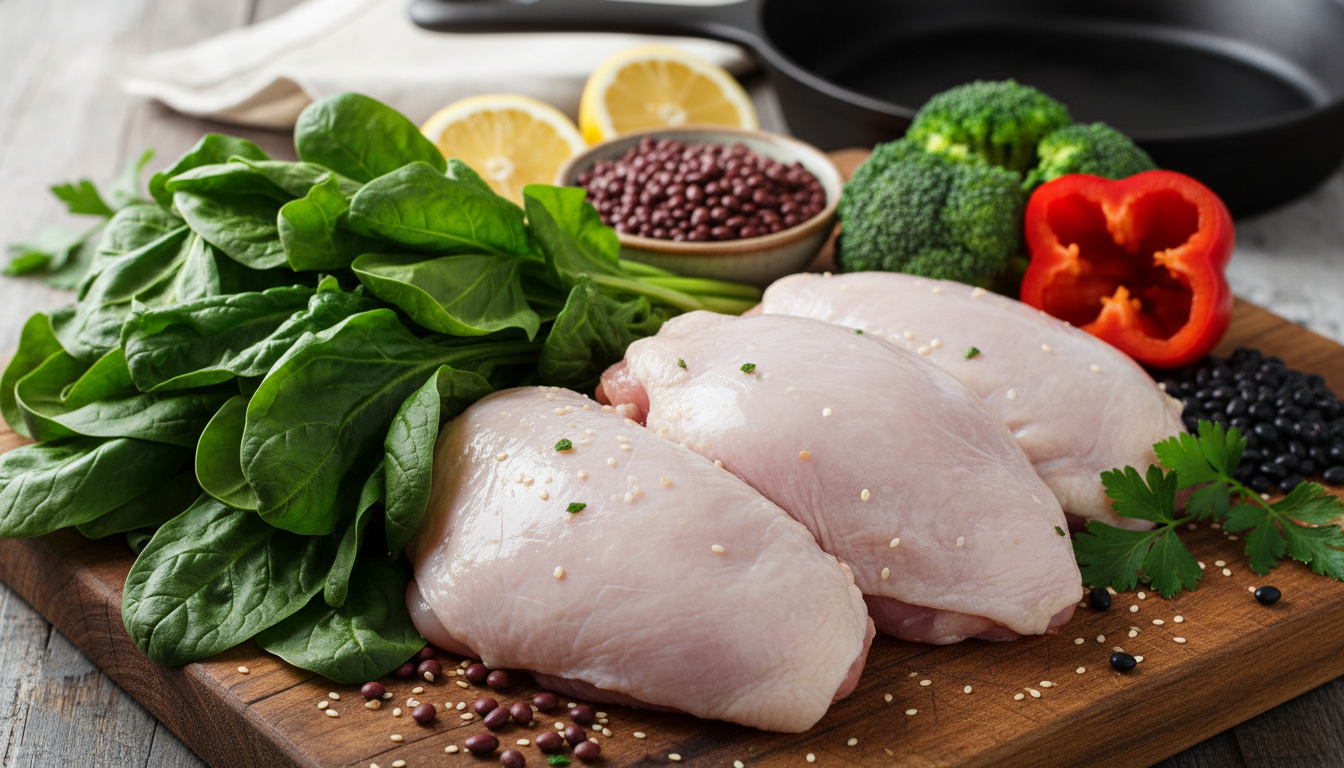
Practical Tips for Beginners: How to Cook Both for Maximum Results
So, you are ready to stop fearing the thigh, but you want to keep your nutrition tight. Here is how I recommend incorporating both cuts into your lifestyle.
1. The 50/50 Split
Don’t feel the need to choose one camp. Buy a pack of breasts and a pack of thighs. Use the breast for your lunch meal preps (where you might be eating cold and just need fuel) and save the thighs for dinner when you can cook them fresh and savor the meal.
2. Cooking Methods Matter
This is critical. You can ruin the health benefits of chicken breast by breading and deep-frying it, and you can make thighs perfectly lean by grilling them.
- For Thighs: Roast, grill, or air-fry. Place them on a rack so the rendered fat drips away. Always remove the skin if you are watching calories.
- For Breasts: Poach, sous-vide, or pan-sear quickly. Use marinades with acids (lemon juice, vinegar) to break down the fibers and keep it tender.
3. Trim the Visible Fat
If you buy boneless, skinless thighs, you will often see little pockets of white fat attached to the meat. If you are strict about your calorie intake, take a pair of kitchen shears and trim this excess fat before cooking. This simple step can drop the calorie count significantly, bringing the thigh closer to the breast’s nutritional profile.
4. Adjust Your Sides
If you are having thighs, maybe swap the heavy cream sauce for a tomato-based salsa, or reduce your portion of avocado. If you are having breasts, you have more caloric “budget” to add healthy fats like olive oil or nuts to your salad.

Conclusion: Balancing Flavor and Nutrition in Your Kitchen
At the end of the day, the chicken thigh vs breast nutrition debate is not about declaring a winner and a loser. It is about understanding the tools in your toolbox.
Chicken breast is a high-precision tool for maximum protein intake with minimum calories. It is great for aggressive weight loss phases. Chicken thighs are a nutrient-dense, flavorful option that supports hormonal health and, most importantly, dietary sustainability.
As your coach, I want you to stop fearing dark meat. Stop thinking that one meal of chicken thighs will ruin your progress. It won’t. In fact, the zinc, iron, and satisfaction you get from it might just fuel your best workout of the week.
Experiment with both. Find the balance that keeps you happy, healthy, and moving toward your goals. Because the “perfect” diet is the one you enjoy enough to keep eating forever.
Now, go fire up that grill.