
A dumbbell back and bicep workout pairs the body’s primary pulling muscles for maximum efficiency. By combining heavy compound back movements with targeted bicep isolation, you pre-exhaust the arms while building a wide, thick posterior chain. This ultimate muscle split requires minimal equipment, corrects structural imbalances, and promotes functional strength, making it the perfect foundation for any home gym routine aimed at muscle hypertrophy, posture, and overall longevity.
Why Pair Back and Biceps? The Pull Muscle Synergy
In the fitness world, movements are categorized into “push” and “pull” patterns. Your back muscles—specifically the latissimus dorsi, rhomboids, trapezius, and rear deltoids—are the primary engines for pulling. Biomechanically, your biceps act as secondary movers in almost every compound back exercise. When you perform a row, your back handles the heavy load, but your biceps assist by flexing the elbow.
Training these groups together in a single dumbbell back and bicep workout is incredibly efficient. You effectively pre-exhaust the biceps during heavy back movements, then finish them off with isolation work. For beginners and veterans alike, this structure prevents overtraining and ensures full recovery before your next pull day. Instead of hitting every body part daily, you dedicate focused energy to a specific movement pattern, maximizing muscular development for your time investment.
Anatomy 101: Knowing Your Target Muscles
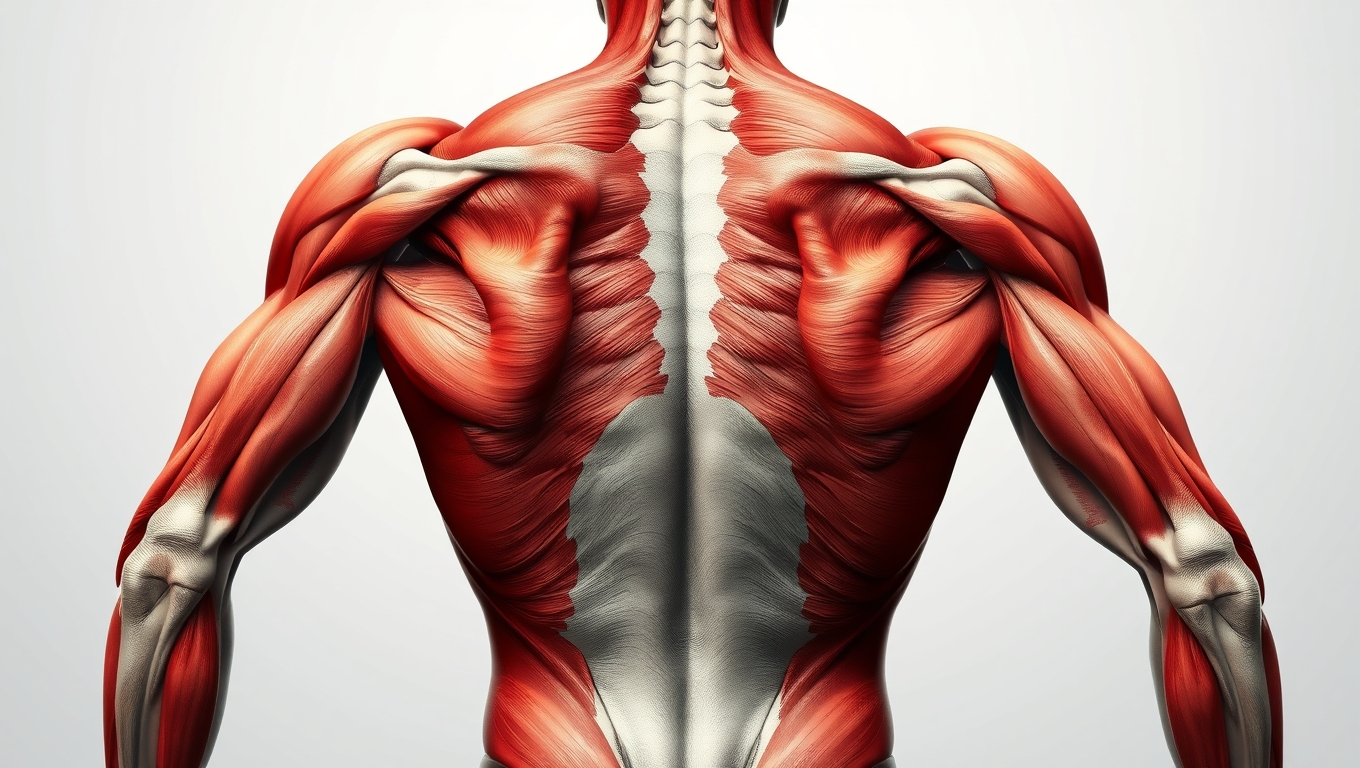
To train effectively, you must understand the landscape of your back and arms. The mind-muscle connection isn’t just bro-science; it is a legitimate way to recruit more muscle fibers and stimulate growth.
- Latissimus Dorsi (Lats): The largest muscles in the upper body, running down the sides of your back. Developing these creates the coveted “V-taper” and back width.
- Trapezius and Rhomboids: Located in the upper and mid-back. They retract the shoulder blades, providing that detailed, 3D thickness and crucial postural support.
- Erector Spinae: The columns of muscle running along your spine. These anti-gravity muscles protect your vertebral discs and maintain an upright posture.
- Posterior Deltoids: While technically shoulder muscles, they function heavily during rowing movements and are essential for a 3D upper back look.
- Biceps Brachii: The two-headed muscle on the front of your upper arm, responsible for elbow flexion and supination.
- Brachialis: Sitting underneath the bicep, developing this muscle pushes the bicep up, making your arm look significantly thicker from the front.
Essential Gear for Your Home Gym Space
One of the greatest advantages of a dumbbell only routine is its simplicity. You do not need cables, lat pulldown machines, or T-bar row stations. However, having the right tools ensures you can apply continuous tension and progress safely.
- Adjustable Dumbbells: These are a game-changer for home gyms. As you get stronger, you need the ability to increase the weight without cluttering your space. Adjustable sets allow you to implement heavy loads for rows and lighter loads for curls seamlessly.
- A Sturdy Bench: An adjustable weight bench unlocks vital angles, such as chest-supported rows and incline curls, while providing a stable base for single-arm movements.
- Grip Support (Optional): As you start lifting heavier on back exercises, your grip might fail before your lats do. A simple pair of wrist straps helps you focus on the back muscles rather than forearm endurance.
The Dynamic Warm-Up: Prepping the Posterior Chain
Never pick up a heavy weight cold. Think of your muscles like a rubber band; if you pull a cold rubber band, it snaps. Before touching the iron, spend 5 to 10 minutes mobilizing the thoracic spine, shoulder girdle, and elbows.
- Arm Circles: 30 seconds forward, 30 seconds backward with big, sweeping motions.
- Band Pull-Aparts (or Air Rows): Squeeze your shoulder blades together to wake up the rhomboids and rear delts.
- Torso Twists: Loosen up the spine and engage the core.
- Wall Slides: Stand with your back against a wall, arms up like a goalpost. Slide your arms up and down while keeping contact with the wall to activate the rotator cuff.
- Cat-Cow: On hands and knees, arch your back up and then sink it down to mobilize the spine and prepare the erector spinae for loading.
The Ultimate Dumbbell Back and Bicep Workout Routine
We start with compound movements for the back because they require the most energy and recruit the most muscle mass. We finish with isolation movements for the biceps.
1. Single-Arm Dumbbell Row (Lat Width & Thickness) This is the undisputed king of dumbbell back exercises. It targets the lats effectively and allows you to isolate one side at a time, fixing muscle imbalances. * Execution: Place your left knee and left hand on a bench. Hold the dumbbell in your right hand with a neutral grip. Imagine a string attached to your elbow and pull it back towards your hip, grazing your ribcage. Squeeze at the top, then lower for a count of 3 seconds. * Pro Tip: Do not rotate your torso to swing the weight. Keep your shoulders square to the floor.

2. Chest-Supported Dumbbell Row (Mid-Back & Posture) Low back pain is a common complaint among lifters. The chest-supported row eliminates lower back strain entirely, allowing you to isolate the upper back and rhomboids with surgical precision. * Execution: Set an adjustable bench to a 30 or 45-degree incline. Lie face down with your chest supported. Hold a dumbbell in each hand and row them upward, driving your elbows toward the ceiling and squeezing your shoulder blades together. * Pro Tip: Use a wide, overhand grip to target the upper back and rear delts, helping correct “hunchback” posture.
3. Dumbbell Romanian Deadlift (Lower Back & Posterior Chain) We cannot neglect the erector spinae and the posterior chain. This movement ties the whole back together and builds a foundation of functional strength and longevity. * Execution: Stand tall with dumbbells in front of your thighs. Keep a slight bend in your knees and push your hips backward as if closing a car door with your glutes. Lower the weights along your shins until you feel a deep hamstring stretch, then drive your hips forward to stand. * Pro Tip: The range of motion depends on your flexibility. If your back starts to round, you have gone too low.
4. Dumbbell Pullover (Lat Isolation & Ribcage Expansion) Often debated as a chest exercise, the pullover is actually one of the few movements that work the lats through a vertical plane without a pull-up bar. * Execution: Lie perpendicular across a flat bench or on the floor. Hold one dumbbell with both hands pressing against the inner plate. Keeping a slight bend in the elbows, slowly lower the weight backward over your head in an arc until you feel a deep stretch in your lats. Pull back using your lats, not your triceps. * Pro Tip: This movement expands the rib cage and stretches the tight fascia of the upper body.
5. Alternating Supinating Bicep Curls (Bicep Peak) Now that the back is crushed, we move to the biceps. By now, your arms should already feel pumped from the rows. * Execution: Stand tall with dumbbells by your sides. Curl one weight up towards your shoulder. As you curl, twist your pinky finger upward (supination). This twisting motion fully engages the biceps brachii. Squeeze hard at the top and lower slowly. * Pro Tip: Keep your elbows pinned to your ribs. If they drift forward, you are using your front deltoids instead of your biceps.
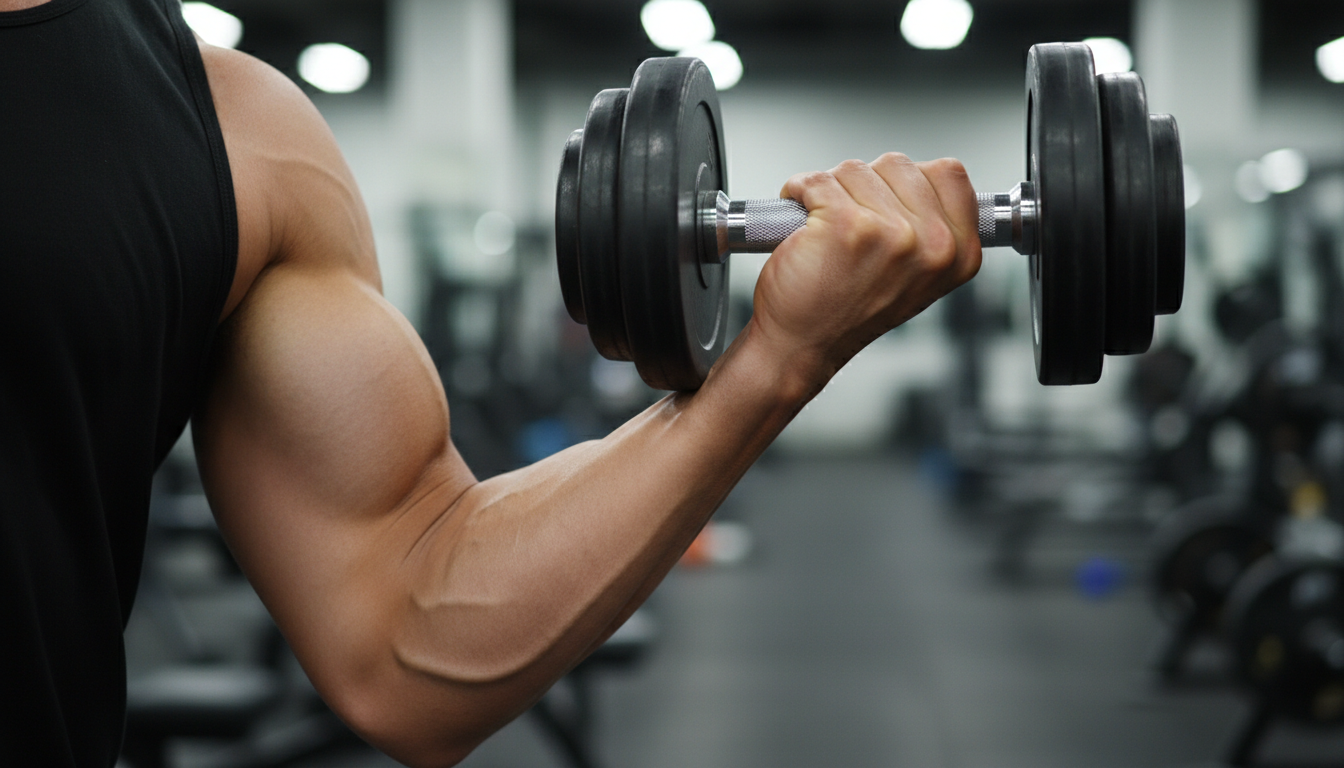
6. Hammer Curls (Forearm & Brachialis Thickness) To get arms that look thick from the front, you need to target the brachialis and the brachioradialis. * Execution: Hold the dumbbells with a neutral grip (palms facing each other). Curl the weights up towards your shoulders without twisting your wrist, as if swinging a hammer. Keep your elbows pinned to your sides. * Pro Tip: This movement also improves grip strength, which translates directly to heavier single arm rows.
Structuring Sets, Reps, and Progressive Overload
The exercises alone are not enough; the programming creates the change. For this split, focus on hypertrophy (muscle growth) ranges.
- Compound Back Movements: 3 to 4 Sets of 8–12 Reps. Rest 60 to 90 seconds between sets.
- Isolation Bicep Movements: 3 Sets of 12–15 Reps. Rest 45 to 60 seconds between sets.
To avoid plateaus, you must apply progressive overload. This doesn’t just mean adding weight. If you have limited dumbbells, you can progress by increasing reps, decreasing rest periods, or improving your tempo (e.g., taking 4 seconds to lower the weight). Consistency combined with these progression methods is the mathematical formula for a bigger back and arms.
Sample Weekly Schedule:
Monday: Dumbbell Back and Bicep Workout
Tuesday: Lower Body & Core
Wednesday: Rest or Active Recovery
Thursday: Chest, Shoulders, and Triceps
Friday: Dumbbell Back and Bicep Workout
Weekend: Rest / Light Cardio
Mastering the Mind-Muscle Connection
The biggest mistake people make with back training is pulling with their arms rather than their back. If you finish a workout and only your biceps are sore, your form needs adjustment. To build a true mind-muscle connection, use these cues:
- Hook Your Hands: Think of your hands merely as hooks holding the weight. Initiate the movement by driving the elbow back.
- The Pencil Squeeze: Imagine there is a pencil between your shoulder blades. Every time you row, try to pinch that pencil.
- Thumbless Grip: Wrapping your thumb over the bar alongside your fingers can reduce forearm engagement and force the lats to work harder.
Common Beginner Mistakes to Avoid
Even seasoned lifters make errors when switching to dumbbells because they lack the fixed stability of gym machines. Avoid these traps to protect your gains and your spine:
- Rounding the Spine: This is the cardinal sin of lifting. Always maintain a neutral spine to protect your lumbar discs. If you cannot keep it straight, lower the weight.
- Using Momentum (Ego Lifting): Swinging your hips or torso uses kinetic energy, not muscle tension. Control the eccentric (lowering) phase of every lift; that is where tissue remodeling happens.
- Short Range of Motion: Do not stop the rep halfway down. Let the weight stretch the muscle at the bottom. The stretch phase is crucial for muscle hypertrophy.
- Ignoring the Scapula: For rows and flys, the movement starts at the shoulder blade, not the elbow. Move the shoulder blade first, then follow through with the arm.
Cool Down and Recovery: Stretching Your Back and Bis
You have done the hard work; now jumpstart the recovery process. Tight lats can pull on your shoulders and cause posture issues, so stretching post-workout is non-negotiable. Hold each of these for 30–60 seconds:
- Child’s Pose: A yoga classic that decompresses the spine and stretches the lats.
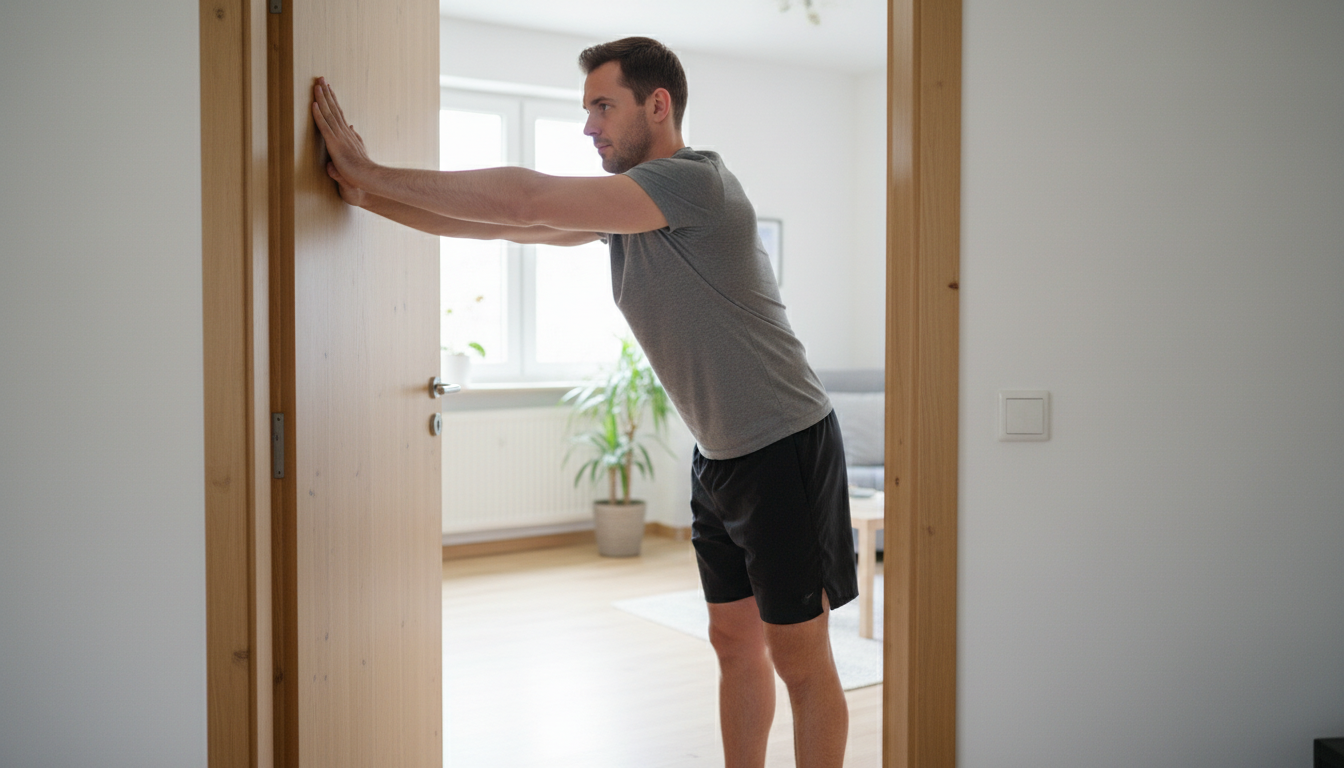
- Doorway Chest and Bicep Stretch: Stand in a doorway, hold the frame with one hand, and gently turn your body away until you feel a deep stretch in the bicep and shoulder.
- Lat Stretch: Grab a doorframe at waist height, lean back, and twist your hips away to feel a stretch down the side of your back.
Ensure you consume adequate protein within a few hours of training to repair the muscle fibers you just tore down. Muscle is built in the recovery phase, not during the workout itself.
Frequently Asked Questions (FAQ)
1. Can I build a wide back without a pull-up bar? Yes. While pull-ups are excellent for vertical pulling, you can build significant width using dumbbells. The dumbbell pullover and properly executed single-arm rows target the lats intensely, creating the V-taper. However, adding a doorway pull-up bar to your fitness journey is a great long-term investment.
2. How often should I perform this back and bicep split? For optimal hypertrophy and recovery, train this split twice a week. This allows for sufficient weekly volume while giving your muscles 48 to 72 hours to recover, repair, and grow between sessions.
3. My lower back hurts during bent-over rows. What should I do? Lower back pain usually indicates a weak core, tight hamstrings, or poor hinging form. Switch to Chest-Supported Rows or Single-Arm Rows using a bench for support. These variations remove the shear force from the lumbar spine while still heavily targeting the lats and rhomboids.
4. Should I use wrist straps for my back exercises? If your grip fails before your back muscles do, absolutely use wrist straps. Your goal on pull day is to fatigue the lats, traps, and rhomboids. Do not let forearm endurance limit your back development. Save grip training for the end of the workout or separate days.
5. Why do my biceps hurt more than my back during rows? This means you are pulling with your arms instead of driving with your elbows. Loosen your grip, use the “thumbless” hook method, and focus entirely on pulling your elbow toward your hip. The hand is just a hook; the back is the engine.
Conclusion: Staying Consistent on Your Fitness Journey
Building a strong, defined back and peak biceps does not happen overnight. It happens on the days you do not feel like training but do it anyway. It happens during that last rep when your muscles are screaming, and you decide to push through with perfect form.
This dumbbell back and bicep workout is your ultimate toolkit. It is simple, highly effective, and time-efficient. You now have the exercises, the rep schemes, and the anatomical knowledge to execute them safely. Remember, fitness is a marathon, not a sprint. Trust the process, track your weights, and focus on getting 1% better every single session. Now, go pick up those dumbbells and build the back you deserve.