
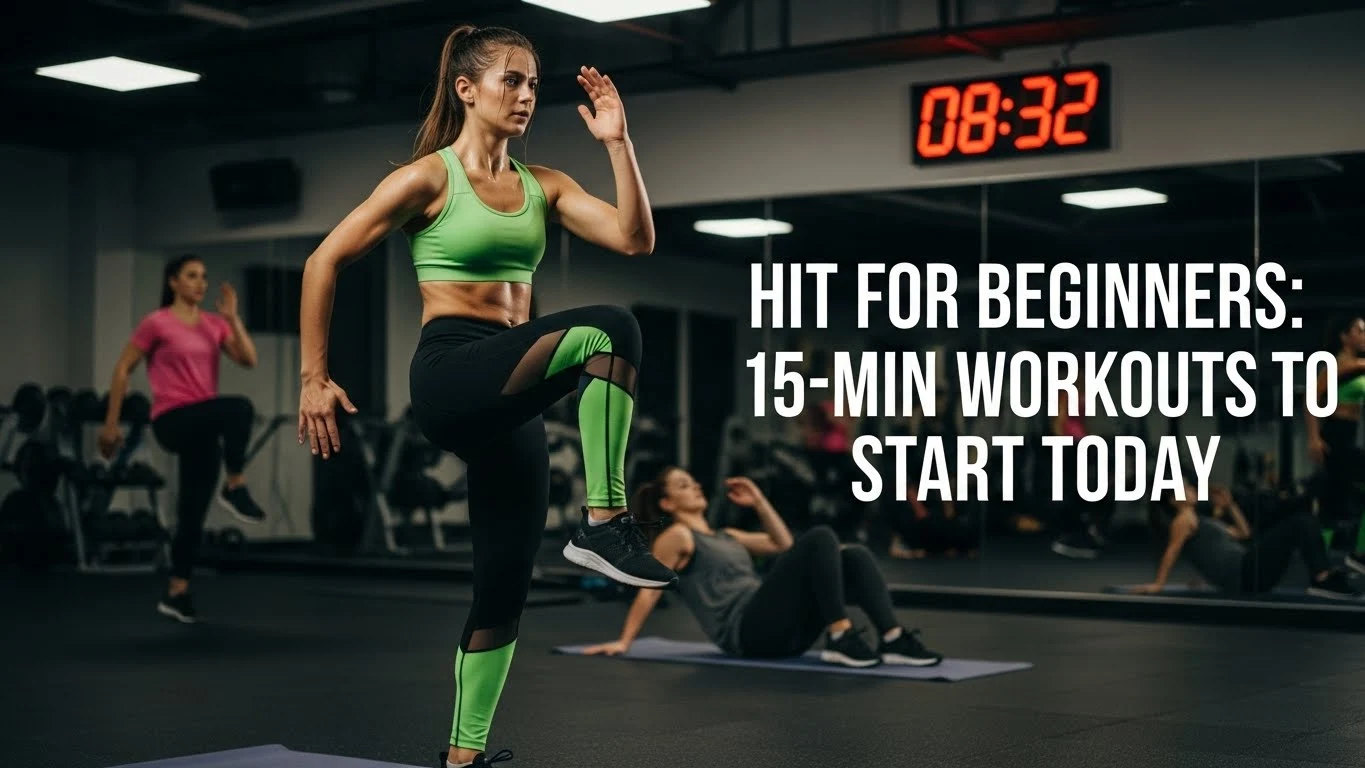
Fitness can feel daunting. As an expert, I simplify High-Intensity Interval Training (HIIT), a potent, time-efficient method. This guide helps newcomers achieve transformative results in minutes. If sculpting your physique and boosting cardiovascular vitality resonates, HIIT for beginners is your launchpad.
Demystifying HIIT: Your Primer for the Uninitiated
HIIT features succinct bursts of maximal anaerobic exertion, interspersed with brief, dynamic recovery, repeating for 10-30 minutes. Unlike steady-state cardio, HIIT rapidly elevates your heart rate to near-maximal thresholds, allowing partial recovery. This dynamic approach challenges cardiovascular and muscular systems for optimal adaptation.
“High-intensity” means an 8-9 effort (1-10 scale); speaking few words is difficult. Recovery phases are pivotal, metabolically resetting your body for the next effort. This oscillating pattern refines aerobic/anaerobic fitness, boosting caloric expenditure during and hours after—known as Excess Post-exercise Oxygen Consumption (EPOC), or the “afterburn effect.”
Why HIIT is a Game-Changer for Beginners (and the Chronically Busy!)
HIIT is impactful for newcomers and the busy due to time-efficiency. Just 15 minutes of intense exertion yields benefits comparable to longer workouts, perfect for packed days.
Beyond convenience, HIIT’s metabolic impact is substantial. High-intensity intervals burn calories during and ignite the EPOC effect after workouts. Your body metabolizes calories at an elevated rate for hours, making HIIT a formidable tool for body composition. It swiftly enhances cardiovascular robustness, improving heart efficiency and endurance faster than conventional cardio. It fosters muscular stamina and contributes to strength gains, especially with bodyweight exercises. HIIT builds mental fortitude, discipline, rapid progress, and self-assurance. Bodyweight HIIT needs no specialized equipment, making it an ideal “first HIIT workout” executable anywhere.

Embarking Safely: Your Indispensable Pre-Workout Compendium
Before your first 15-minute HIIT workout, safety is paramount. High-intensity training demands effort; preparation prevents injury. If you have health conditions or fitness uncertainty, consult a healthcare professional before starting any new regimen to confirm HIIT is safe for you.
Once cleared, prepare: wear supportive footwear, clear your workout area, and hydrate sufficiently. A thorough warm-up is foundational, priming muscles and cardiovascular system, reducing injury risk. Listen to your body. Modify exercises, extend rest, or stop if in pain. Challenge yourself judiciously, avoiding pushing through discomfort.
Your Inaugural 15-Minute HIIT Workout: A Step-by-Step Blueprint for Beginners
Ready for HIIT for beginners? This 15-minute sequence is your inaugural high-intensity interval training, focusing on foundational bodyweight movements. Prioritize form and incremental intensity. Consistency and safe execution outweigh speed.
Workout Architecture:
- Warm-up: 3 minutes
- Work Phase: 9 minutes (3 rounds of 3 exercises)
- Cool-down: 3 minutes
Detailed Dissection:
1. Warm-up (3 Minutes):
- Marching in Place (1 minute): Gentle steps, knees to hip height. Fluid, quicker motion for blood flow.
- Arm Circles (30 seconds forward, 30 seconds backward): Stand tall, controlled rotations to mobilize shoulders.
- Torso Twists (1 minute): Feet shoulder-width, hands on hips. Rotate torso side to side, hips stable. Lubricates spine, engages core.
2. Work Phase (9 Minutes):
Three exercises in a circuit, repeated three times. Work 30 seconds, then 30 seconds active recovery.
- Round 1 (3 minutes):
- Exercise 1: Jumping Jacks (30 seconds work): Feet together, arms at sides. Jump, spread feet wide, sweep arms overhead, return. Modification: Step out one leg at a time.
- Active Recovery: Marching in Place (30 seconds): Gentle motion. Focus on breath.
- Exercise 2: Bodyweight Squats (30 seconds work): Feet shoulder-width, toes out. Lower hips, chest up, back straight. Go only as deep as comfortable, preserving form.
- Active Recovery: Marching in Place (30 seconds):
- Exercise 3: High Knees (30 seconds work): Brisk march/jog, driving knees to chest. Pump arms. Modification: March knees slower.
- Active Recovery: Marching in Place (30 seconds):
- Round 2 (3 minutes): Repeat Exercises 1, 2, 3 with active recovery. Sustain intensity, use recovery for breathing.
- Round 3 (3 minutes): Final Exercises 1, 2, 3. Push safely; cool-down follows.

3. Cool-down (3 Minutes):
- Overhead Arm Stretch (30 seconds per side): Extend arm overhead, angle opposing side.
- Quad Stretch (30 seconds per leg): Stand, grasp ankle, draw heel to glutes. Use wall.
- Hamstring Stretch (1 minute): Sit, one leg straight, other bent (foot to inner thigh). Hinge from hips, reach to extended leg.
- Deep Breathing (1 minute): Lie/sit comfortably. Slow, deep breaths (inhale nose, exhale mouth).
This plan ensures interval training benefits, mitigates risks. Stay hydrated and congratulate yourself for conquering your first rewarding beginner interval training session!
Beyond the Fundamentals: Additional 15-Minute Routines to Discover Today
After mastering your initial 15-minute HIIT, explore variations to keep routines invigorating. HIIT for beginners is adaptable; simple adjustments—swapping exercises or tweaking work-to-rest ratios—create new routines. Maintain high-intensity bursts, recuperative recovery, while prioritizing impeccable form.
Here are two additional 15-minute routines for your schedule, adding variety:
Routine 2: Core and Lower Body Emphasis
- Warm-up: 3 minutes (as before)
- Work Phase: 9 minutes (3 rounds of 3 exercises)
- Intervals: 30 seconds work, 30 seconds active recovery (Marching in Place)
- Exercises:
1. Reverse Lunges: Step back, lower hips (knees 90 degrees). Push off rear foot to stand. Alternate.
2. Plank: Straight line head to heels, core braced. Elbows under shoulders. Modification: Drop to knees.
3. Glute Bridges: Lie on back, knees bent, feet near glutes. Elevate hips, squeeze glutes, descend slowly.
- Cool-down: 3 minutes (as before)
Routine 3: Dynamic Full Body Blitz
- Warm-up: 3 minutes (as before)
- Work Phase: 9 minutes (3 rounds of 3 exercises)
- Intervals: 30 seconds work, 30 seconds active recovery (Marching in Place)
- Exercises:
1. Mountain Climbers: High plank. Alternately drive knees to chest, core engaged, hips stable.
2. Push-ups: Hands wider than shoulder-width. Lower chest, body straight. Push up. Modification: On knees or against wall.
3. Squat Jumps (or Standard Squats): Bodyweight squat, explosively jump. Land softly, transition. Modification: Standard bodyweight squats.
- Cool-down: 3 minutes (as before)
Heed your body, adjust intensity. These routines perpetuate beginner interval training, cultivating endurance and strength. Variety and purposeful progression are key to successful easy HIIT integration.

Common Beginner HIIT Missteps (and How to Astutely Dodge Them!)
While HIIT for beginners is potent, common errors impede progress or cause injury. Awareness is crucial for a robust, sustainable HIIT practice.
1. Omitting Warm-up and Cool-down: Perilous. Warm-up primes cardiovascular system/muscles, reducing strains. Cool-down aids recovery, enhances flexibility, lowers heart rate.
- Solution: Dedicate 3-5 minutes for dynamic warm-up and static cool-down. Non-negotiable.
2. Sacrificing Form for Speed/Intensity: Prioritizing speed over form increases injury risk, compromises efficacy.
- Solution: Focus on precise movements. If form falters, reduce pace/modify exercise. Quality over quantity.
3. Premature Overexertion: “High-intensity” isn’t utter exhaustion from day one. Miscalibrating fitness leads to burnout/injury.
- Solution: Start conservatively. Use a sustainable work-to-rest ratio (e.g., 20 work/40 rest, or 30 work/30 rest). Incrementally increase intensity/duration. “High intensity” evolves.
4. Neglecting Recovery: HIIT is demanding. Overtraining without recovery leads to fatigue, plateaus, injury.
- Solution: Novices: limit HIIT to 2-3 times/week, non-consecutive days. Include active recovery (walking, gentle yoga), prioritize sleep.
5. Benchmarking Against Others: Comparing beginner efforts to advanced athletes causes inadequacy.
- Solution: Your journey is unique. Focus on individual progress. Become a superior iteration of yourself.
Sidestepping these errors ensures your first HIIT workout and subsequent sessions are safe, effective, enjoyable, fostering long-term success.

Scaling Up: Intelligent Strategies to Progress Your HIIT Workouts
After mastering HIIT for beginners, amplify the challenge. Progressive overload demands continually elevating demands for sustained results. Evolve your HIIT workouts:
1. Refine Work-to-Rest Ratios: E.g., from 30 work/30 rest, shift to 30 work/20 rest, or 40 work/20 rest. Sustain intensity in longer work periods.
2. Augment Rounds or Exercises:
- Add a fourth round (if duration allows).
- Introduce a fourth distinct exercise to your circuit.
3. Integrate More Demanding Exercises:
- Substitute basic exercises with dynamic/compound movements (e.g., jump squats, decline push-ups).
- Introduce plyometrics cautiously, after foundational strength.
4. Incorporate External Resistance:
- Add light resistance (bands for squats, dumbbells for lunges) to elevate the challenge.
- Ensure resistance allows impeccable form throughout high-intensity intervals.
5. Increment Workout Frequency (with Prudence):
- From 2 times weekly, cautiously escalate to 3 times, ensuring rest days. Beginners avoid daily HIIT to prevent overtraining/injury.
6. Extend Overall Workout Duration:
- From 15-minute sessions, extend to 20 or 25 minutes. HIIT efficacy wanes beyond 30 minutes (hard to sustain maximal intensity).
Attune to your body. Incremental adjustments consistently yield best outcomes. Aim for marginally more arduous, never utterly unbearable. This progression ensures continued, safe, effective fitness, transforming your easy HIIT routine into an advanced one.

Forging HIIT into a Habit: Pillars for Consistency and Enduring Success
Initial enthusiasm for fitness is potent, but transforming that spark into an enduring habit is true success. For beginner interval training, unwavering consistency is bedrock. Strategies to weave HIIT into your lifestyle:
1. Schedule Workouts: Treat 15-minute HIIT sessions like pivotal appointments. Block calendar slots and commit. Consistent timing cements routine.
2. Start Small, Grow Incrementally: Your foundational 15-minute workouts are excellent. Resist pressure to do more. Celebrate showing up, not just maximum intensity. This fosters adherence.
3. Find an Accountability Partner: Exercising with a friend, family, or online community provides motivation. Knowing another relies on you helps when motivation wanes.
4. Track Your Progress: Use a journal/app to log sessions: exercises, work-to-rest ratios, sensations. Witnessing endurance/strength grow is motivating.
5. Prioritize Enjoyment and Variety: If workouts fill you with dread, you won’t stick. Experiment with diverse HIIT routines, novel exercises, or varied environments. Variety combats boredom, challenges your body. Your easy HIIT routine can be diversified.
6. Heed Your Body and Embrace Flexibility: Some days offer boundless energy; others less. Modify your workout or take an extra rest day if needed. Pushing through exhaustion leads to injury/burnout. Flexibility is vital for sustainability.
7. Celebrate Non-Scale Victories: Resist focusing solely on weight loss/muscle gain. Acknowledge elevated energy, improved sleep, reduced stress, mastering an exercise, or enhanced strength/confidence. These are powerful motivators.
Embedding these strategies transforms your initial foray with HIIT for beginners into a rewarding, enduring fitness habit, yielding lifetime health benefits.
You’ve embarked on an effective pathway to fitness through HIIT for beginners. We covered principles, why it’s for beginners, and a blueprint for your first 15-minute workout. We equipped you with strategies to circumvent pitfalls, elevate challenges, and integrate this into a lasting habit. The journey to a fitter, more formidable you begins with that first intentional stride. Embrace the challenge, listen to your body’s profound wisdom, and exult in every incremental victory. Your 15-minute investment will undoubtedly yield prodigious dividends in heightened energy, unyielding strength, and an overarching sense of holistic well-being. Seize this moment: take decisive action today, and resolutely commit to your very first easy HIIT routine; your future self will eternally commend your sagacity.