
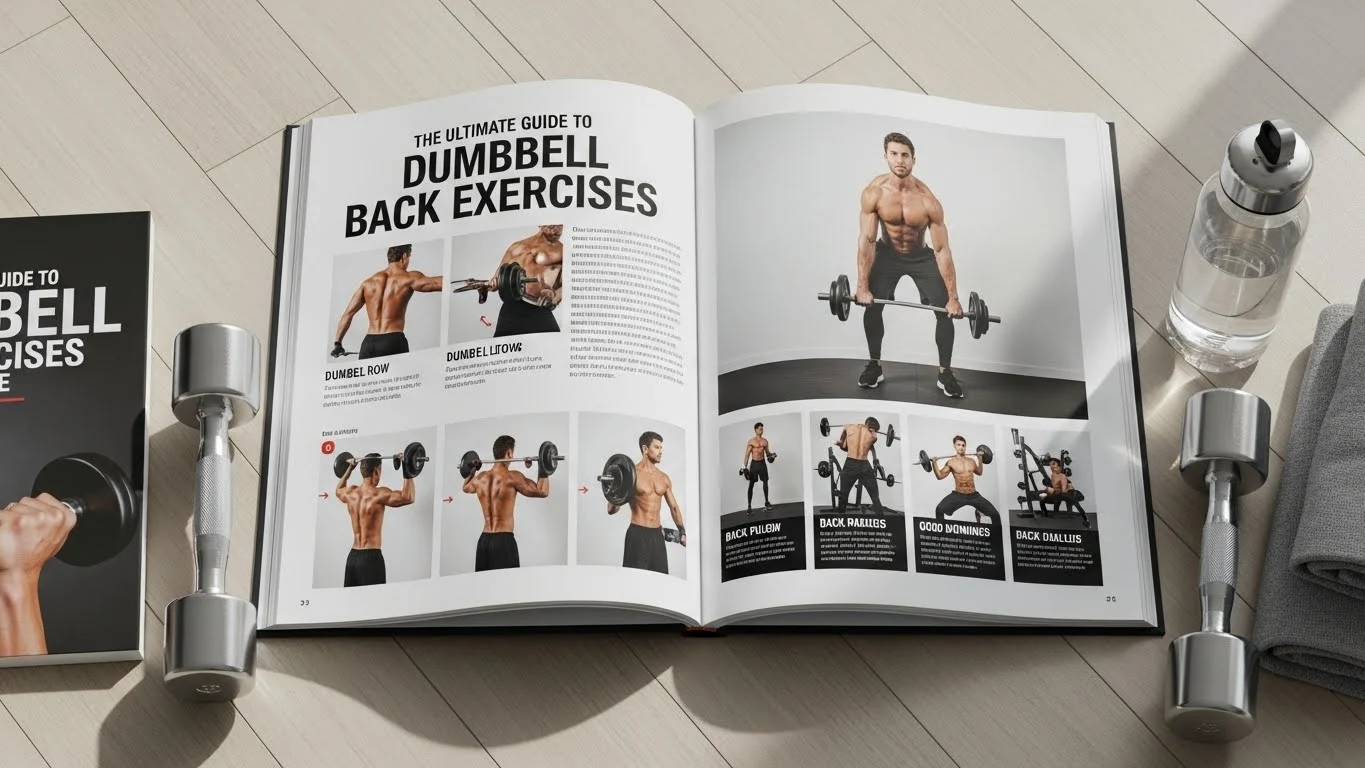
Here is a comprehensive, expert-level guide to building a strong back using only dumbbells at home.
Building a wide, thick, and muscular back is often viewed as the hardest task for the home fitness enthusiast. When we think of back training, our minds usually drift toward lat pulldown machines, seated cable rows, and heavy barbells in a commercial gym. Consequently, the back is one of the most neglected muscle groups for those training in their living rooms or garages.
However, the notion that you cannot build an impressive physique without heavy machinery is a myth. With the right intensity, form, and selection of movements, dumbbell back exercises at home can yield incredible results. Whether you are looking to correct “computer posture,” alleviate lower back pain, or build a classic V-taper, a pair of dumbbells is all the equipment you truly need.
In this guide, we will break down the anatomy of the back, the biomechanics of pulling movements, and the most effective exercises to construct a comprehensive home back workout.
Why You Must Prioritize Back Training
Before diving into the exercises, it is crucial to understand why we train the back. In the fitness world, there is a concept known as the “Mirror Muscle Bias.” We tend to train what we can see (chest, abs, biceps) and neglect what we cannot.
Neglecting your posterior chain leads to:
1. Poor Posture: Overworking the chest without balancing it with back training rolls the shoulders forward (kyphosis).
2. Imbalanced Physique: A thick chest looks unusual without the width of the lats to support it.
3. Injury Risk: A weak back puts excessive strain on the spine during daily activities.
Implementing dumbbell back exercises at home corrects these imbalances, pulling the shoulders back and stabilizing the spine.
Anatomy 101: Knowing What You Are Targeting
To train like an expert, you must understand the landscape of your back. It is not one single muscle, but a complex web of muscle groups.
1. Latissimus Dorsi (Lats): The largest muscles in the upper body. They run down the sides of the back. Developing these creates the coveted “V-taper” and back width.
2. Trapezius (Traps): Located in the upper center of the back and neck. The upper traps elevate the shoulders (shrugs), while the mid and lower traps retract the shoulder blades. They provide back thickness.
3. Rhomboids: Located underneath the traps and between the shoulder blades. They are vital for posture and pulling the shoulder blades together.
4. Erector Spinae: The muscles running along your spine (lower back). They are the pillars of your core strength and stability.
5. Rear Deltoids: While technically a shoulder muscle, they function heavily during rowing movements and are essential for a 3D upper back look.

The Top 10 Dumbbell Back Exercises at Home
The following exercises are ranked by effectiveness, safety, and their ability to target the specific areas mentioned above.
1. The Single-Arm Dumbbell Row
Target: Lats, Rhomboids, Biceps.
This is the king of unilateral back exercises. By working one side at a time, you can correct muscle imbalances and achieve a greater range of motion than with a barbell.
How to do it:
1. Place your left knee and left hand on a flat bench (or a sturdy sofa/chair). Your back should be flat, parallel to the ground.
2. Hold the dumbbell in your right hand with a neutral grip (palm facing your body). Let the arm hang fully extended to stretch the lat.
3. The Pull: Drive your elbow up and back toward your hip. Do not just pull the weight straight up; think of a “sawing” motion.
4. Squeeze the shoulder blade at the top.
5. Lower slowly to the starting position.
Expert Tip: Do not rotate your torso to swing the weight up. Keep your shoulders square to the floor to ensure the lat is doing the work, not momentum.
2. Dumbbell Bent-Over Row (Bilateral)
Target: Lats, Mid-Traps, Posterior Chain stability.
This moves allows you to move more total weight and engage the core significantly.
How to do it:
1. Stand with feet shoulder-width apart, holding a dumbbell in each hand.
2. Hinge at the hips, pushing your glutes back until your torso is at a 45-degree angle (or lower). Keep knees slightly bent.
3. Keep your spine neutral (flat back).
4. Row both dumbbells up toward your waistline, squeezing your shoulder blades together.
5. Control the negative (lowering phase).
3. Dumbbell Pullover
Target: Lats (specifically the lower attachment), Serratus Anterior.
This is a unique movement because it isolates the lats without engaging the biceps, which is rare for back exercises. It effectively mimics the biomechanics of a gym lat pulldown machine.
How to do it:
1. Lie perpendicular across a bench or on the floor. Hold one dumbbell with both hands, pressing palms against the inner plate.
2. Start with the weight directly over your chest.
3. Keeping a slight bend in the elbows (lock them in this position), lower the weight backward over your head.
4. Go as deep as your shoulder mobility allows, feeling a massive stretch in your lats and armpits.
5. Pull the weight back over your chest using your lats, not your triceps.
4. Dumbbell Deadlift
Target: Erector Spinae, Glutes, Hamstrings, Traps.
While often considered a leg exercise, the deadlift is the ultimate posterior chain builder. Heavy deadlifts build the “Christmas tree” structure of the lower back and thicken the traps.
How to do it:
1. Stand with feet hip-width apart, dumbbells in front of your thighs or at your sides.
2. Hinge at the hips and bend knees to lower the weights toward the floor. Keep the weights close to your shins.
3. Keep your chest up and back flat.
4. Drive through your heels to stand up straight, squeezing your glutes and back at the top.
5. Rear Delt Dumbbell Fly (Reverse Fly)
Target: Rear Delts, Rhomboids, Mid-Traps.
This is an isolation movement essential for shoulder health and upper back detail.
How to do it:
1. Assume the same bent-over position as the bilateral row.
2. Start with palms facing each other.
3. With a slight bend in the elbows, raise the arms out to the sides like wings.
4. Squeeze the upper back hard at the top.
5. Control the descent. Do not let gravity drop the weights.
6. Renegade Row
Target: Lats, Core, Stability.
This is a functional movement that builds back strength while torching the abs.
How to do it:
1. Get into a push-up position (plank) holding a dumbbell in each hand.
2. Keep your feet wide for balance.
3. Row one dumbbell up to your hip while balancing on the other arm.
4. Fight the urge to twist your hips; keep them square to the floor.
5. Alternate sides.
7. Dumbbell Shrugs
Target: Upper Traps.
For the neck and upper back thickness.
How to do it:
1. Stand upright holding heavy dumbbells at your sides.
2. Ideally, shrug your shoulders straight up toward your ears.
3. Hold for a second at the top, then lower slowly.
4. Avoid rolling the shoulders; simply go up and down.
8. Chest-Supported Dumbbell Row (Incline Row)
Target: Mid-Back, Lats (removes lower back strain).
If you have an adjustable bench, this is arguably the best isolation exercise for the back as it prevents “cheating.”
How to do it:
1. Set a bench to a 30 or 45-degree incline.
2. Lie face down (prone) on the bench.
3. Let the arms hang straight down.
4. Row the weights upward, retracting the scapula.

Mastering Technique: The Mind-Muscle Connection
The biggest mistake people make with dumbbell back exercises at home is pulling with their arms rather than their back. The biceps are secondary movers in these exercises; if you finish a back workout and only your arms are sore, your form needs adjustment.
Three Cues for Better Back Engagement:
1. “Hook” your hands: Think of your hands merely as hooks holding the weight. Initiate the movement by driving the elbow back.
2. Pencil Squeeze: Imagine there is a pencil between your shoulder blades. Every time you row, try to pinch that pencil.
3. Thumbless Grip: Sometimes, wrapping the thumb over the bar (alongside fingers) rather than around it can reduce forearm engagement and force the back to work harder.
Structuring Your Home Routine
You have the exercises, but how do you put them together? Here are three routine templates based on your experience level.
The Beginner Routine (Foundation)
Focus: Learning movement patterns and building base strength.
- Dumbbell Deadlift: 3 sets of 8–10 reps
- Single-Arm Dumbbell Row: 3 sets of 10–12 reps per arm
- Dumbbell Pullover: 3 sets of 12 reps
- Rest: 90 seconds between sets.
The Intermediate Routine (Hypertrophy)
Focus: Hitting the back from different angles for width and thickness.
- Bent-Over Dumbbell Row (Bilateral): 4 sets of 8–10 reps
- Single-Arm Row: 3 sets of 12 reps
- Chest-Supported Row (or Renegade Row): 3 sets of 10 reps
- Reverse Fly: 3 sets of 15 reps (lighter weight)
- Rest: 60–90 seconds.
The Advanced Routine (Intensity)
Focus: High volume and supersets to exhaust the muscles.
- Superset 1: Dumbbell Deadlift (4×8) + Shrugs (4×15)
- Superset 2: Heavy Single-Arm Row (4×8) + Pullovers (4×12)
- Finisher: Reverse Flys – 3 sets to failure (aim for 20 reps).

Equipment Guide: Setting Up Your Home Gym
While you can technically do these exercises with just dumbbells, a few small additions can maximize your results.
1. Dumbbells: Adjustable dumbbells (like Bowflex or PowerBlock) are ideal for home use as they save space and allow for progressive overload. You need heavy weights for rows/deadlifts and light weights for flys.
2. Adjustable Bench: Highly recommended. It unlocks chest-supported rows, pullovers, and ensures proper support for single-arm rows.
3. Wrist Straps: As your back gets stronger, your grip might fail before your back muscles do. A cheap pair of wrist straps allows you to keep rowing even when your hands are tired.
Common Mistakes to Avoid
Even seasoned lifters make errors when switching to dumbbell back exercises at home because they lack the stability of gym machines.
- Rounding the Back: This is the cardinal sin of lifting. Always maintain a neutral spine (flat back) to protect your lumbar discs.
- Using Too Much Momentum: If you have to jerk your torso violently to get the weight up, the weight is too heavy. Drop the ego, drop the weight, and control the rep.
- Short Range of Motion: Do not stop the rep halfway down. Let the weight stretch the muscle at the bottom. The “stretch” phase is crucial for muscle hypertrophy (growth).
FAQ: Dumbbell Back Training
Q: Can I really get a wide back without pull-ups?
A: Yes. While pull-ups are excellent, vertical pulling isn’t the only way to build width. The dumbbell pullover and proper execution of rows (targeting the lats) will build width. However, if you have a sturdy doorframe, adding a pull-up bar to your dumbbell routine is a great idea.
Q: How often should I train back?
A: For most people, training back twice a week is optimal. This allows for sufficient volume while giving the muscles 2-3 days to recover and grow.
Q: My lower back hurts during bent-over rows. What should I do?
A: This usually indicates a weak core or poor form. Switch to Chest-Supported Rows or Single-Arm Rows (using a bench for support). These take the strain off the lower back while still targeting the lats.
Conclusion
Building a powerful, aesthetic back doesn’t require a gym membership card. It requires consistency, intensity, and a pair of dumbbells. By mastering the hip hinge, focusing on the elbow drive, and utilizing the variety of dumbbell back exercises at home outlined in this guide, you can sculpt a physique that looks powerful from every angle.
Start with the basics, master your form, and remember: muscle is built in the recovery. Eat well, sleep well, and lift heavy.