
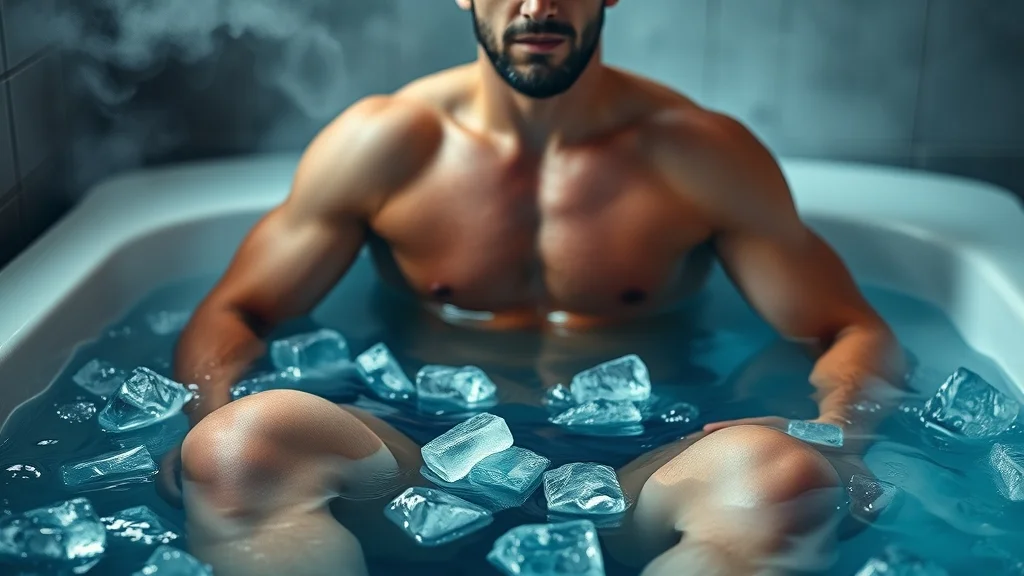
In the world of high-performance athletics and biohacking, few recovery methods have gained as much traction—and social media fame—as the cold plunge. From elite NFL locker rooms to the backyard setups of fitness enthusiasts, Cold Water Immersion (CWI) has become a staple for those seeking to optimize recovery, reduce inflammation, and build mental resilience.
However, as the popularity of ice baths rises, so does the confusion surrounding them. One question looms larger than the rest: How cold should the water actually be? Is it a race to zero, or is there a specific thermal window that yields the best physiological results?
If you are shivering through a near-freezing dip thinking “colder is always better,” you might be doing more harm than good. Finding the best cold plunge temperature after workout sessions is a nuanced science that depends on your physiology, your training goals, and your experience level.

The Physiology of the Plunge: What Happens to Your Body?
To understand the ideal temperature, we must first understand the mechanism. When you submerge your body in cold water, you trigger a cascade of physiological responses.
1. Vasoconstriction and Vasodilation
The immediate shock of cold water causes vasoconstriction. Your blood vessels, particularly in the extremities, narrow rapidly to direct blood toward your vital organs to maintain core body temperature. This process helps flush out waste products like lactic acid and metabolic debris that accumulate during intense exercise. When you exit the water and warm up, vasodilation occurs, rushing oxygen-rich, nutrient-dense blood back into the muscle tissue. This “pump” effect is central to the recovery benefits of CWI.
2. The Anti-Inflammatory Response
Micro-tears in muscle fibers caused by lifting weights or high-impact cardio lead to inflammation. While some inflammation is necessary for growth, excessive inflammation causes Delayed Onset Muscle Soreness (DOMS). Cold water lowers the temperature of the damaged tissue, slowing metabolic activity and effectively numbing the nerve endings, which reduces pain and swelling.
3. The Nervous System Reset
Beyond the muscles, the cold engages the autonomic nervous system. The initial shock spikes norepinephrine (adrenaline) and dopamine—increasing alertness and mood by up to 250%—while forcing you to control your breath helps regulate the parasympathetic nervous system (rest and digest) post-plunge.

The “Goldilocks” Zone: Defining the Best Cold Plunge Temperature
Here is the definitive answer backed by the majority of sports science research: The best cold plunge temperature after workout recovery falls between 50°F and 59°F (10°C to 15°C).
This range is often surprising to newcomers who assume they need to break through a layer of solid ice to get benefits. However, scientific consensus suggests that this temperature window provides the optimal balance between physiological shock and safety.
Why Not Colder?
Dropping the temperature below 45°F (7°C) certainly increases the mental challenge, but it yields diminishing returns regarding physical recovery.
- The Shivering Barrier: At extremely low temperatures, the body enters a state of thermal distress too quickly. If you are shivering violently within 30 seconds, your body is fighting for survival rather than focusing on muscle repair.
- Duration vs. Temperature: To reap the benefits of hydrostatic pressure and tissue cooling, you need to stay submerged for a specific duration (usually 2 to 5 minutes). If the water is 34°F, most people cannot sustain the immersion long enough for the cold to penetrate deep muscle tissue. 55°F allows for a 10-minute soak, which is often more effective for deep tissue recovery than a 30-second dip at 35°F.
The Protocol for Beginners vs. Advanced
- Beginner: Start at 60°F (15.5°C). This will feel shockingly cold if you are unadapted.
- Intermediate: Aim for the sweet spot of 50°F–55°F.
- Advanced: 45°F–50°F. Going lower than 45°F is generally reserved for mental resilience training rather than physical recovery optimization.

The Hypertrophy Dilemma: When Not to Plunge
This is the most critical section for bodybuilders and strength athletes. While finding the best cold plunge temperature after workout is important, getting the timing wrong can sabotage your gains.
The Science of Blunted Gains
Hypertrophy (muscle growth) and strength adaptations rely on the body’s inflammatory signal. When you lift heavy weights, you create stress. The body detects this stress and sends signals to repair the muscle bigger and stronger.
If you jump into a cold plunge immediately after a hypertrophy session, you aggressively suppress that inflammation. Research published in the Journal of Physiology has shown that regular post-exercise cold water immersion can attenuate (reduce) long-term gains in muscle mass and strength.
The Rules of Engagement:
1. For Muscle Growth (Bodybuilding/Powerlifting): Do not cold plunge within 4 hours of your training session. Let the natural inflammatory signals do their job. Save the cold plunge for rest days or prior to workouts (cooling the body before exercise can actually improve performance in hot environments).
2. For Performance/Competition (CrossFit/Sports): If you are an athlete playing a tournament (e.g., a soccer player with multiple games in a weekend or a CrossFit athlete competing over several days), immediate muscle size is not the priority—recovery is. In this scenario, plunge immediately. The goal is to reduce soreness so you can perform again tomorrow.
3. For Endurance (Running/Cycling): Endurance adaptations (mitochondrial biogenesis) seem less affected by cold water than myofibrillar growth. Runners can generally plunge post-run without fearing a loss of performance gains.

Duration: How Long Should You Stay In?
The temperature dictates the time. There is an inverse relationship between how cold the water is and how long you should stay in.
- At 50°F – 55°F: Aim for 3 to 5 minutes.
- At 45°F – 50°F: Aim for 2 to 3 minutes.
- At >55°F: You can extend to 10 to 15 minutes.
Dr. Andrew Huberman, a neuroscientist who has popularized protocols for cold exposure, suggests a total of 11 minutes per week divided into 2-4 sessions. This “minimum effective dose” is enough to stimulate the metabolic and neurochemical benefits without overstressing the system.
Safety Protocols: Avoiding Hypothermia and “After-Drop”
Even at the ideal temperature of 50°F, water conducts heat away from the body 25 times faster than air. Safety is paramount.
1. The Mammalian Dive Reflex
When you first enter, do not hyperventilate. This is the panic response. Focus on long, slow exhalations. This triggers the vagus nerve and calms your heart rate.
2. Watch Your Extremities
Your hands and feet are heat radiators. They will hurt first. If the pain in your fingers becomes unbearable, keep them out of the water (“praying mantis” style) or wear neoprene booties/gloves. You can still cool your core effectively with your hands out.
3. Beware of “After-Drop”
When you exit the tub, your peripheral blood vessels dilate, and cold blood from your extremities mixes with the warm blood in your core. This causes your core temperature to continue dropping after you get out.
- Protocol: Do not jump immediately into a scalding hot shower. This can cause fainting due to rapid blood pressure changes. Instead, dry off, put on warm clothes, and move your body. Do horse stance squats or arm circles to generate endogenous heat.

DIY vs. High-Tech: Achieving the Temperature
You don’t need a $5,000 tub to hit the 50°F target, but consistency helps.
The Ice Bag Method (Low Budget)
- Pros: Cheap entry point.
- Cons: Hard to regulate temperature. You have to buy ice constantly. It is often colder at the surface than the bottom.
- Tip: Use a pool thermometer. Don’t guess.
The Chest Freezer (Medium Budget)
- Pros: Consistent temperature.
- Cons: requires sealing (caulk), sanitation maintenance (ozone/hydrogen peroxide), and unplugging before use to avoid electrocution risk.
The Dedicated Chiller (High Budget)
- Pros: Set it and forget it. Constant filtration.
- Cons: Expensive.
- Advantage: This is the easiest way to maintain the best cold plunge temperature after workout consistently. You can dial in 53°F and know exactly what you are getting every time.
Subjective Feeling vs. Objective Data
One of the biggest mistakes athletes make is chasing the “pain.” They assume that if it doesn’t hurt excruciatingly, it isn’t working.
This is false. The metabolic benefits of brown fat activation (burning calories to generate heat) and the reduction of inflammation occur efficiently at 55°F. If you can sit in 55°F water for 10 minutes calmly, you are likely getting more lymphatic drainage benefits than someone panic-breathing in 39°F water for 60 seconds.
Listen to your body. If you are feeling run down, sick, or highly stressed, a brutal cold plunge might be too much hormetic stress for your system. In those cases, raise the temperature or skip the session.

FAQ: Troubleshooting Your Plunge
Q: Should I shower before the plunge?
A: Yes. Removing sweat, oils, and bacteria helps keep your water clean, especially if you aren’t using a high-end filtration system.
Q: Can I alternate Hot and Cold (Contrast Therapy)?
A: Absolutely. Contrast therapy (e.g., Sauna to Ice Bath) is excellent for pumping the lymphatic system. The standard ratio is 3:1 (e.g., 15 minutes sauna, 5 minutes cold). Always end on cold if you want the metabolic boost; end on heat if you want relaxation.
Q: My legs ache deep inside the bone. Is that normal?
A: This is usually a sign the water is too cold for your current tolerance or you stayed in too long. Shorten the duration or raise the temp.
Conclusion: Consistency Over Intensity
The quest for the best cold plunge temperature after workout recovery ends at the intersection of science and sustainability. While the allure of sub-freezing temperatures makes for great Instagram content, the physiological sweet spot lies between 50°F and 59°F (10°C – 15°C).
In this range, you maximize the anti-inflammatory response, boost dopamine, and aid recovery without blunting hypertrophy (provided you time it correctly) or risking hypothermia.
Remember, cold plunging is a practice, not a stunt. The goal is not to survive the coldest water possible once a month, but to integrate a manageable, effective cold therapy protocol into your routine consistently. Respect the cold, time your plunges according to your training goals, and let the chill fuel your performance.