Hey there, Adam Steele here.
Usually, when we talk about nutrition, we are obsessing over macros. We’re counting protein for muscle repair, carbohydrates for fuel, and healthy fats for hormonal balance. We focus on how our body looks and how much weight we can move on the barbell.
But I want you to pause for a second. Think about the one sense you rely on more than any other to navigate your world, read this article, and even spot your landing during a box jump.
I’m talking about your vision.
We take our eyes for granted until they start giving us trouble. In our modern world, we are putting our eyes through an absolute marathon every single day. Between the sunlight on our morning run and the artificial glow of our smartphones and laptops, our retinas are under constant siege.
That is where lutein and zeaxanthin come into the picture. These aren’t just fancy scientific buzzwords; they are the absolute MVPs of eye health. If you care about maintaining sharp vision and blue light protection for the long haul, you need to pay attention to these nutrients.
Let’s dive deep into what they are, why you need them, and how to get them into your diet.

What Exactly Are These Nutrients? (Meet the Carotenoids)
To understand why these nutrients are so critical, we have to look at their family tree. Lutein and zeaxanthin belong to a family of nutrients called carotenoids.
If you’ve ever admired the bright orange of a carrot, the deep red of a tomato, or the vibrant yellow of corn, you have seen carotenoids in action. They are pigments produced by plants to absorb light energy for photosynthesis and protect the plant from sun damage.
Here is the fascinating part: out of over 600 carotenoids found in nature, only two are deposited in high quantities in your retina. You guessed it lutein and zeaxanthin.
I like to think of them as the “special forces” of your nutrition plan. While other nutrients circulate generally throughout the body, these two have a very specific deployment zone. They travel through your bloodstream and set up camp directly in the back of your eye. They are specifically transported to the macula the part of your eye responsible for your central, detailed vision.
Without them, your eyes are essentially defenseless against the oxidative stress of daily life.
The Superpower of the Macular Pigment
Let’s get a little technical, but I promise to keep it simple.
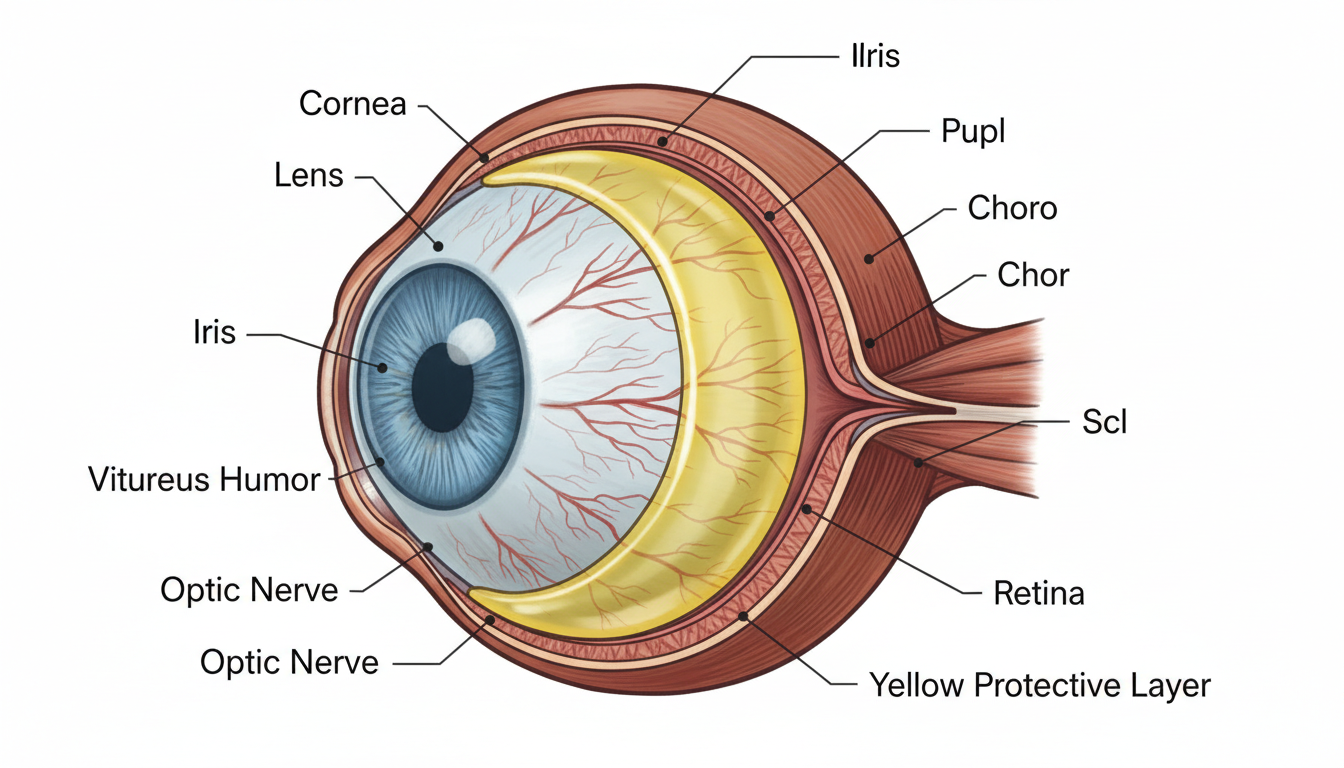
The macula is the bullseye of your retina. It allows you to see fine details, read small print, and recognize faces. Within the macula, lutein and zeaxanthin accumulate to form what we call the macular pigment.
Think of the macular pigment as a shield. The density of this pigment known as Macular Pigment Optical Density (MPOD) is a direct indicator of your eye health.
If your MPOD is low, it’s like walking out into the desert sun without sunglasses. You are exposed. You are vulnerable.
If your MPOD is high, you have built in armor.
When I coach clients on fitness, I talk about “structural integrity.” You build muscle to protect your joints. Similarly, you consume lutein and zeaxanthin to build the structural integrity of your retina. A denser pigment means better visual performance, less glare sensitivity, and faster recovery from bright flashes (like oncoming headlights while driving at night).
Your Internal Sunglasses: Blue Light Protection Explained
If there is one topic that gets people worried these days, it is screens. We are all guilty of it. I spend time analyzing client data on a screen; you are probably reading this on a phone right now.
Digital devices emit high energy blue light. Unlike other forms of light, blue light waves are short and scatter easily. They penetrate deep into the eye, passing right through the cornea and lens to hit the retina. Over time, this exposure can lead to digital eye strain and even cellular damage.
This is where blue light protection becomes vital.
Lutein and zeaxanthin act as your body’s internal sunglasses. Because these pigments are yellow, they naturally filter out blue light. It is basic color theory: yellow cancels out blue.
By absorbing these high energy wavelengths before they can damage the sensitive photoreceptor cells in your retina, these nutrients stop the damage at the gate. It is a filtration system that you build from the inside out.
I often tell my clients that while blue light blocking glasses are a great tool, they are external. Diet is internal. You want to layer your defenses. You wouldn’t wear a weight belt but have a weak core, right? In the same way, don’t rely solely on glasses if your internal nutrition is lacking.
Why Your Retina Depends on Them for Long Term Health
We aren’t just talking about tired eyes today; we are talking about your vision 20 or 30 years from now.
The leading cause of vision loss in older adults is Age Related Macular Degeneration (AMD). This condition occurs when the macula deteriorates over time. It’s scary stuff, and currently, it’s irreversible.
However, research shows a strong link between high dietary intake of lutein and zeaxanthin and a reduced risk of developing advanced AMD.
The mechanism here is antioxidation. Your eyes have a very high metabolic rate, which means they produce a lot of free radicals (unstable atoms that damage cells). Combined with light exposure, your retina is a factory for oxidative stress.
Lutein and zeaxanthin are potent antioxidants. They patrol the retina, neutralizing free radicals and preventing inflammation. They sacrifice themselves to save your eye cells.
If you are an athlete or just someone who loves being active, your vision is crucial for balance, reaction time, and coordination. Preserving your retina isn’t just about “seeing,” it’s about maintaining your ability to perform in the world.

Eating for Better Vision: Top Food Sources of Lutein and Zeaxanthin
Alright, enough science. Let’s talk food. As a coach, I believe in a “food first” approach. Supplements are great (and we will get to them), but your foundation must be solid nutrition.
If you want to boost your lutein and zeaxanthin levels, you need to look for specific colors in the produce aisle. Dark greens, yellows, and oranges are your best friends.
Here is the “Adam Steele Approved” list of top sources:
1. Dark Leafy Greens (The Gold Standard)
Kale and spinach are the undisputed heavyweights here.
- Kale: Just one cup of raw kale packs a massive punch of lutein.
- Spinach: Close behind kale. Whether in a salad or a smoothie, get it in.
- Collard Greens & Swiss Chard: excellent alternatives if you want to switch up the flavor profile.
2. Egg Yolks
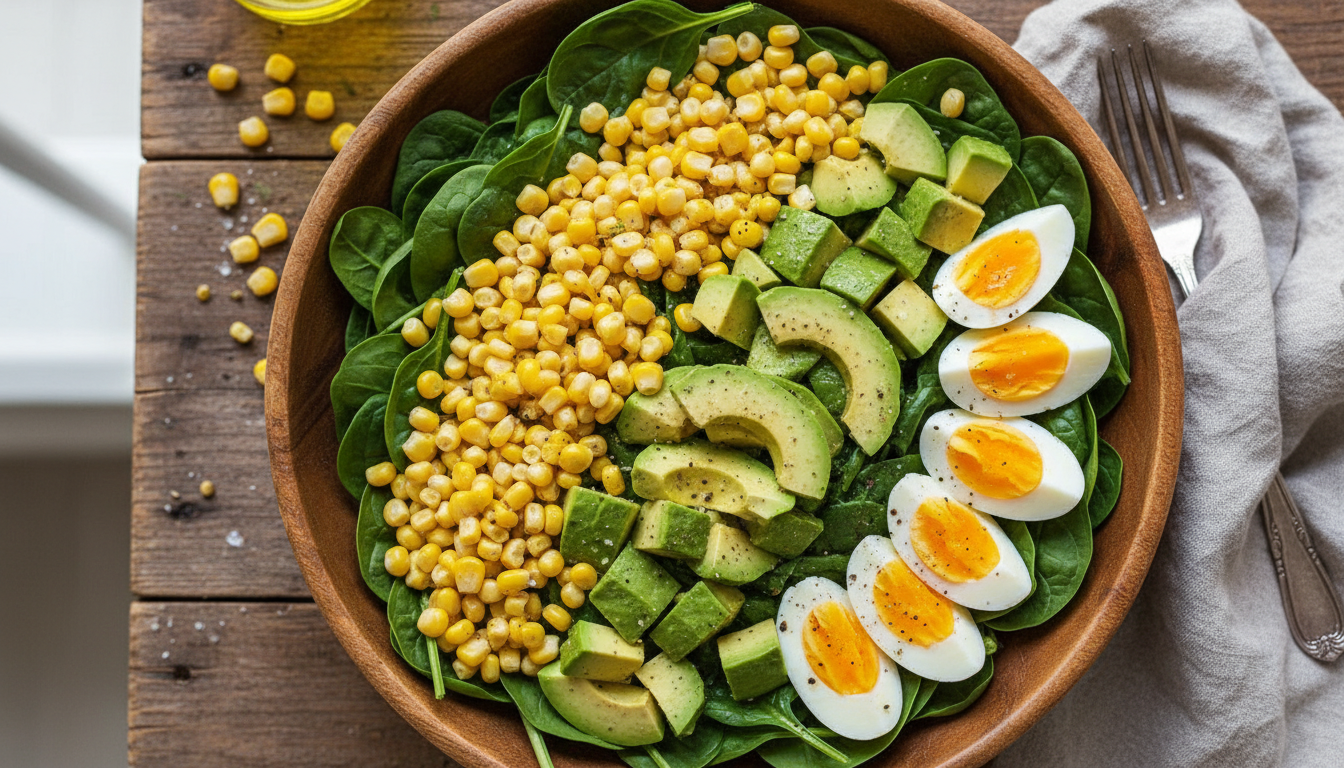
Do not I repeat, do NOT throw away the yolk. While leafy greens have higher total amounts of these nutrients, the lutein and zeaxanthin in egg yolks are highly “bioavailable.” This means your body absorbs them very easily because of the fat content in the yolk. The yellow color of the yolk? That is pure lutein and zeaxanthin.
3. Corn and Orange Peppers
Yellow corn and orange bell peppers are fantastic sources of zeaxanthin specifically. While greens are high in lutein, these yellow/orange veggies help balance the ratio with zeaxanthin.
4. Pistachios
The only nut with significant amounts of these eye nutrients. They make a perfect snack for on the go eye health.
Pro Tip for Absorption:
These nutrients are fat-soluble. This is a non negotiable rule: You must eat them with fat.
If you eat a bowl of plain spinach, you absorb very little. If you drizzle that spinach with olive oil or eat it with an egg, your absorption skyrockets. Stop fearing healthy fats; your eyes need them to unlock these nutrients.
Should You Take a Supplement? Expert Tips for Beginners
I get asked this constantly: “Adam, can’t I just take a pill?”
Ideally, you get your nutrients from whole foods because you get the added fiber, vitamins, and minerals. However, let’s be real. The average modern diet is severely lacking in greens.
Most studies suggest that to see real benefits for macular pigment density and blue light protection, you need about 10 mg of lutein and 2 mg of zeaxanthin daily.
To get 10 mg of lutein, you’d need to eat a solid cup of spinach every single day. Most people just don’t do that consistently.
If you struggle to eat your greens, a supplement is a smart insurance policy. Here is what to look for:
- The 10:2 Ratio: Look for a formula that mimics nature: 10 mg Lutein to 2 mg Zeaxanthin. This is the ratio used in the famous AREDS2 eye health studies.
- Source Matters: Look for lutein derived from Marigold flowers. It is the industry standard for a reason.
- Added Fat: Since they are fat-soluble, soft gels (which usually contain oil) are generally better absorbed than dry tablets. If you take a dry tablet, take it with a meal containing fat.
If you already have a family history of macular degeneration, or if you spend 10+ hours a day on screens, supplementation moves from a “maybe” to a “strongly recommended” in my book.
Conclusion: Small Changes for a Brighter Future
We spend hours in the gym conditioning our bodies. We prep our meals to fuel our muscles. It is time we apply that same discipline to our eyes.
Lutein and zeaxanthin are not magic pills that will fix your vision overnight. They are long term investments. They are about building that shield that macular pigment layer by layer, meal by meal.
Start small. Throw a handful of spinach into your morning scramble. Snack on pistachios instead of chips. If you know your diet is gaps, grab a quality supplement.
Your vision is your window to the world. It allows you to see the weights you lift, the trails you run, and the faces of the people you love. Protect it with the same intensity you bring to your workouts.
Stay healthy, keep your eyes open, and I’ll see you in the next one.
Adam